
School Bus Safety in 2025: 7 Critical Technologies Every District Should Know About
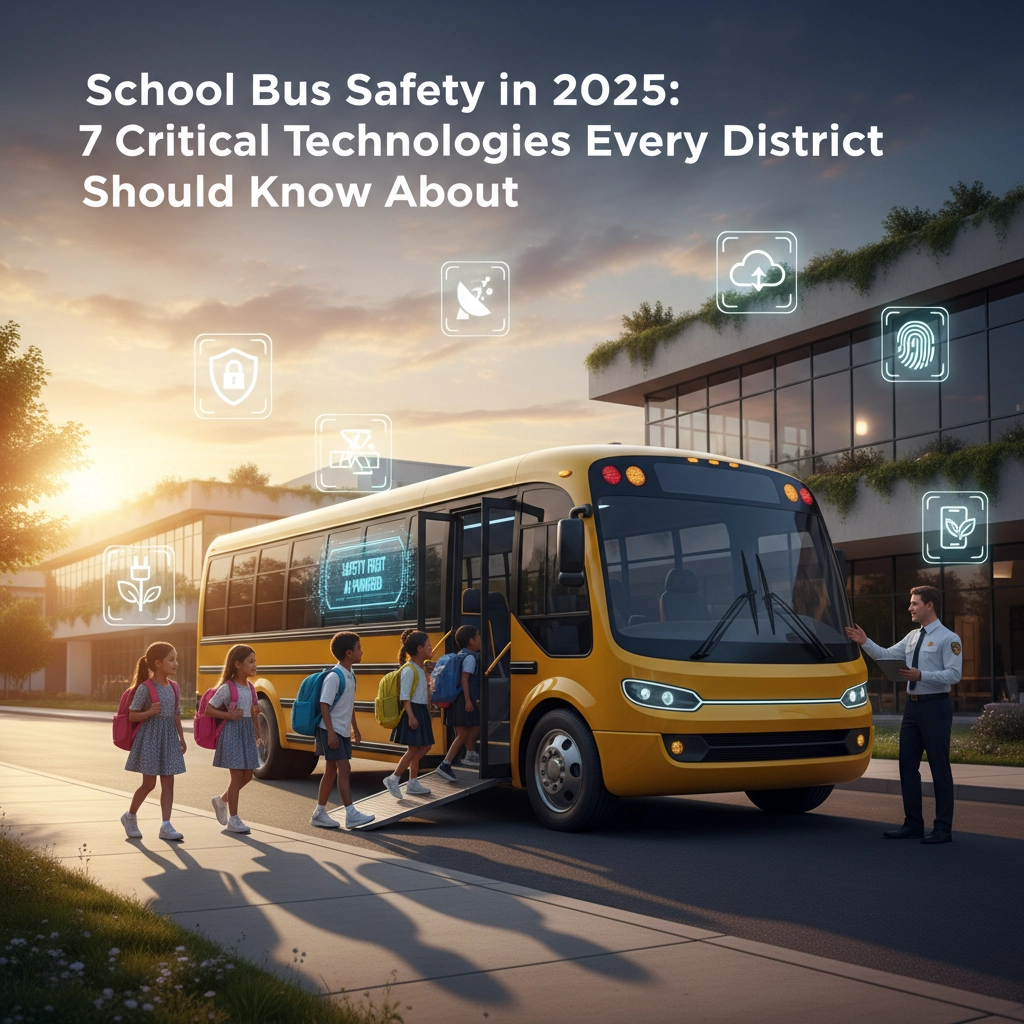
School bus safety has never been more advanced than it is right now. With over 25 million students riding school buses daily across nearly 500,000 vehicles nationwide, the stakes couldn't be higher. While school buses remain statistically 70 times safer than private vehicles, smart districts are embracing cutting-edge technologies to make that safety record even better.
At Schoolbells Transportation, we've seen firsthand how the right technology can transform student safety from a reactive concern into a proactive advantage. Here are the seven critical technologies that forward-thinking school districts are implementing in 2025 to protect their most precious cargo.
1. GPS & AI-Enabled Tracking with Smart Route Optimization
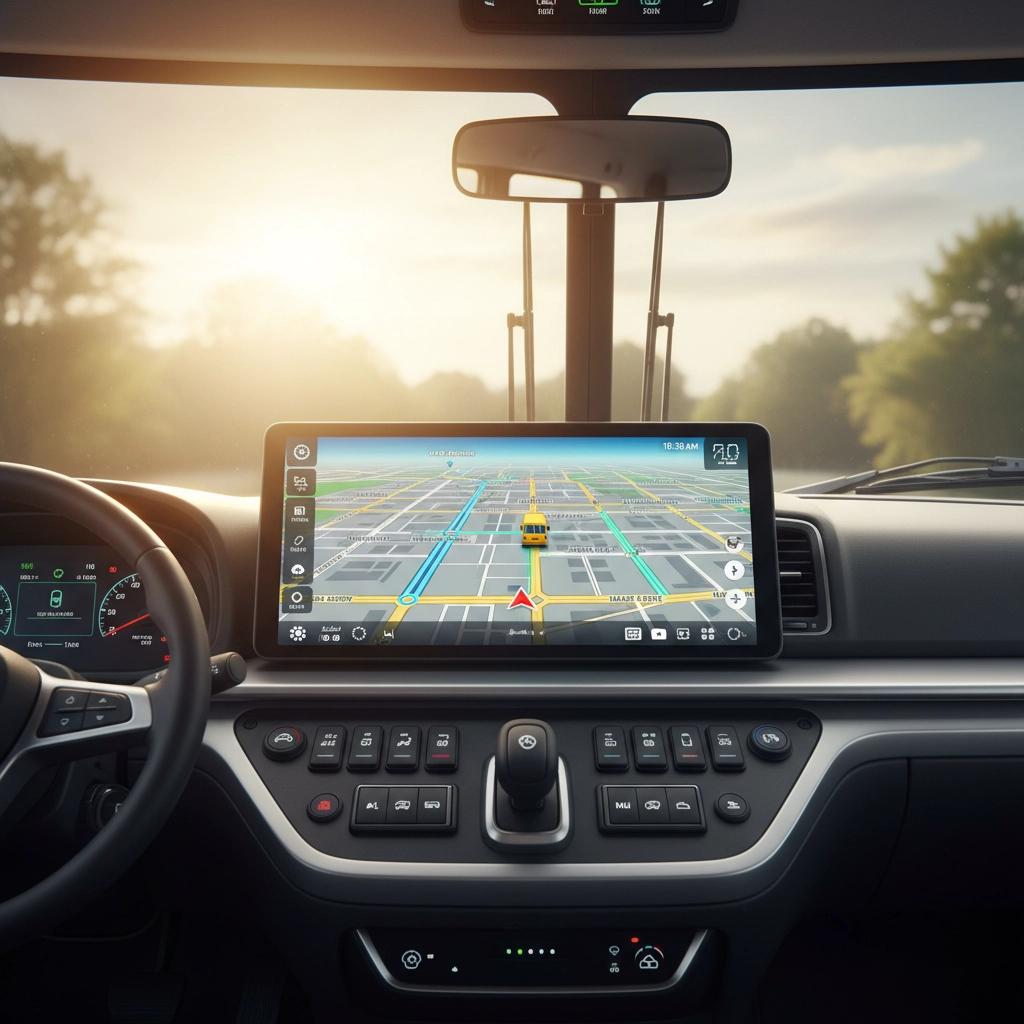
Gone are the days when GPS was just about knowing where a bus is located. Today's systems combine real-time tracking with artificial intelligence to create smarter, safer transportation networks.
What makes it critical: • Provides pinpoint accuracy for emergency responders during incidents • Gives parents reliable pickup and drop-off time estimates • Alerts dispatchers immediately when buses deviate from approved routes • Optimizes routes in real-time based on traffic, weather, and road conditions
The AI component is what sets modern systems apart. These algorithms analyze traffic patterns, historical route data, and current conditions to automatically suggest the safest and most efficient paths. When an emergency occurs, dispatchers can instantly provide first responders with the bus's exact location and the fastest route to reach it.
Real-world impact: Districts using AI-enabled GPS report 15-20% reductions in fuel costs and significantly improved on-time performance, while emergency response times have decreased by an average of 3-4 minutes.
2. 360-Degree AI-Powered Camera Systems
Modern camera systems aren't just recording everything: they're actively watching, learning, and alerting drivers to potential safety issues before they become problems.
Key capabilities include: • Complete visibility around the entire bus perimeter • Real-time hazard detection and driver alerts • 99% accuracy rates with minimal false alarms • Automatic incident documentation and reporting
What's revolutionary about these systems is their focus on recognizing and rewarding safe driving practices, not just catching mistakes. By identifying high-performing drivers and documenting best practices, districts create positive safety cultures that sustain long-term improvements.
The technology works by: Using computer vision and edge computing to process video feeds instantly, alerting drivers to external threats like aggressive motorists or internal issues like students moving unsafely while the bus is in motion.
3. Video Analytics for Real-Time Behavior Detection
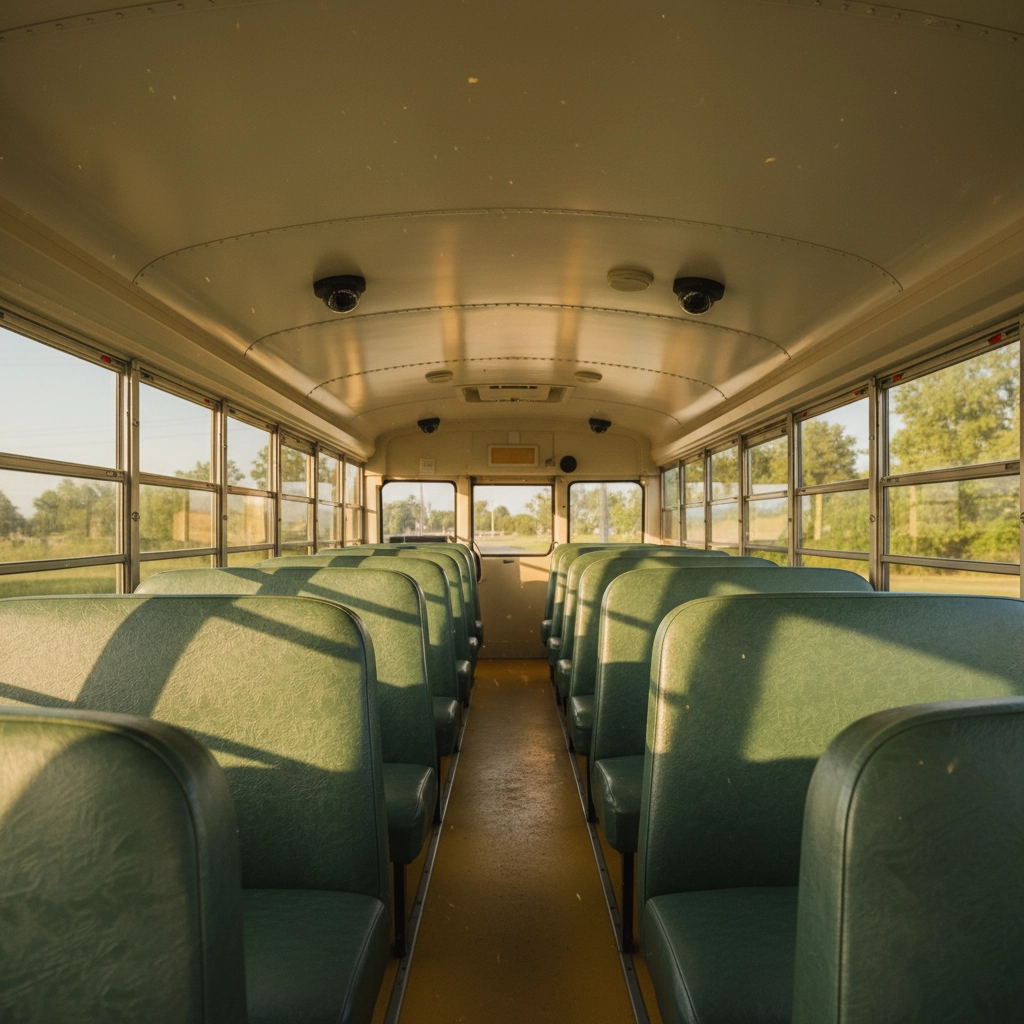
Beyond just recording incidents, AI-powered video analytics actively monitor student behavior and alert drivers to potentially dangerous situations as they develop.
Critical detection capabilities: • Students standing while the bus is moving • Bullying or aggressive behavior between passengers • Objects blocking emergency exits or aisles • Unauthorized individuals attempting to board
This technology serves a dual purpose: immediate safety intervention and long-term driver improvement. Footage provides valuable coaching opportunities, allowing drivers to learn from real-world scenarios and develop better situational awareness skills.
Training benefits: Drivers who participate in video-based coaching programs show 25-30% fewer safety incidents and report higher job satisfaction due to the supportive, educational approach rather than punitive monitoring.
4. Electronic DVIRs with Student Verification Technology
Paper inspection forms are becoming a safety liability. Electronic Digital Vehicle Inspection Reports (DVIRs) integrate student verification technology to ensure no child is accidentally left on a bus.
Essential features: • Digital pre-trip and post-trip inspection checklists • Mandatory end-of-route student verification process • Automatic storage and retrieval of inspection data • Real-time compliance reporting for administrators
The student verification component requires drivers to physically walk through the bus and confirm every seat is empty before completing their route. This systematic approach serves as the last line of defense against one of every parent's worst nightmares.
Compliance advantage: Electronic DVIRs automatically generate reports for regulatory compliance, reducing administrative burden while ensuring districts meet all safety documentation requirements.
5. Stop-Arm Violation Detection Systems
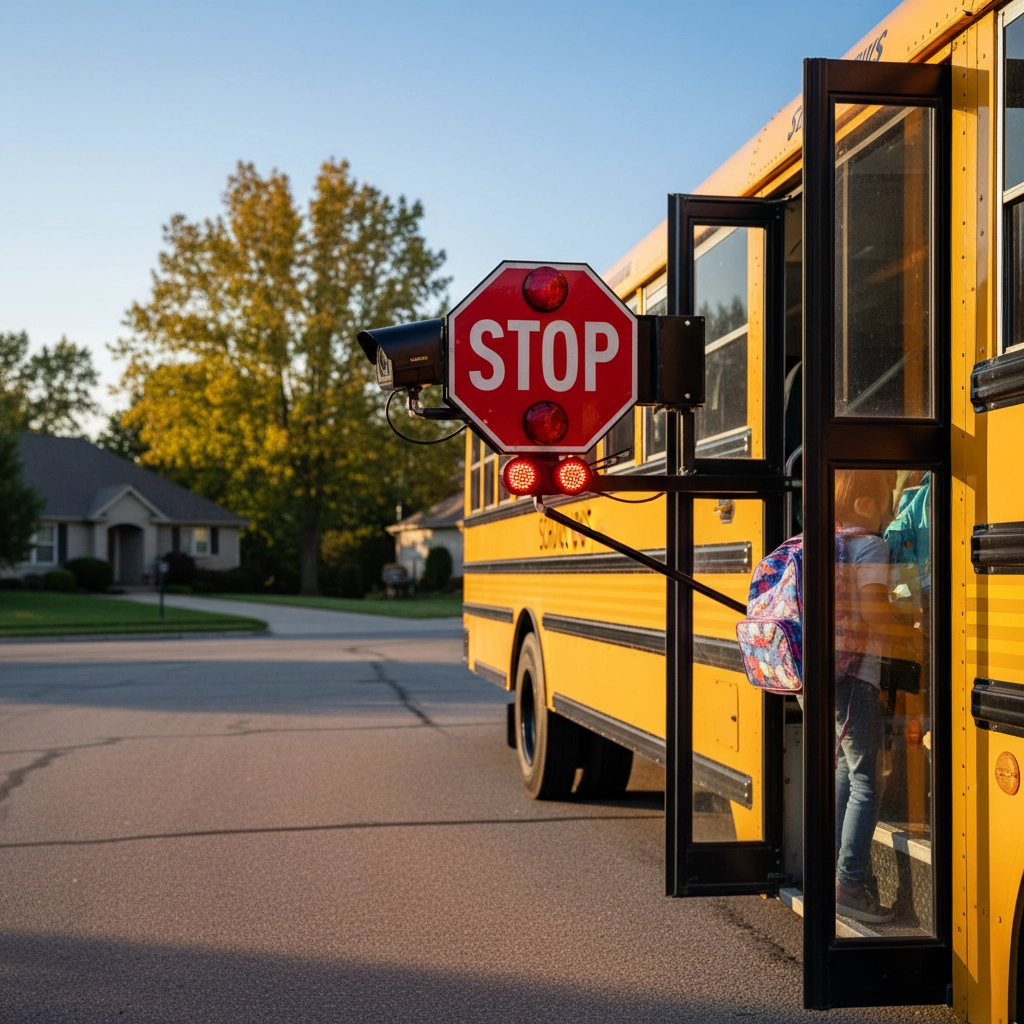
Illegal passing of school buses remains one of the most dangerous situations students face. Advanced camera systems now automatically capture violations and provide documented evidence for enforcement.
System capabilities: • High-definition recording of stop-arm violations • License plate capture and recognition • Time-stamped evidence for law enforcement • Integration with local traffic enforcement agencies
These systems create accountability for dangerous driving behavior around school buses. Many districts report that simply announcing the presence of violation detection cameras significantly reduces illegal passing incidents.
Safety impact: States with active stop-arm violation programs report 40-60% reductions in illegal passing incidents within the first year of implementation.
6. Real-Time Emergency Alerting and Communication
When emergencies happen, every second counts. Modern emergency communication systems ensure drivers have instant access to help when they need it most.
Critical communication features: • One-touch panic buttons for immediate emergency alerts • Push-to-talk over cellular (POC) systems for continuous communication • GPS-integrated emergency response coordination • Direct connections to local emergency services
These systems work independently of traditional radio infrastructure, ensuring communication remains available even in areas with poor radio coverage. Emergency responders receive precise location data along with real-time updates from the driver about the nature of the emergency.
Response improvement: Districts with integrated emergency communication systems report average emergency response time reductions of 2-3 minutes, which can be critical in medical emergencies or serious safety incidents.
7. Integrated Telematics and Fleet Management Platforms
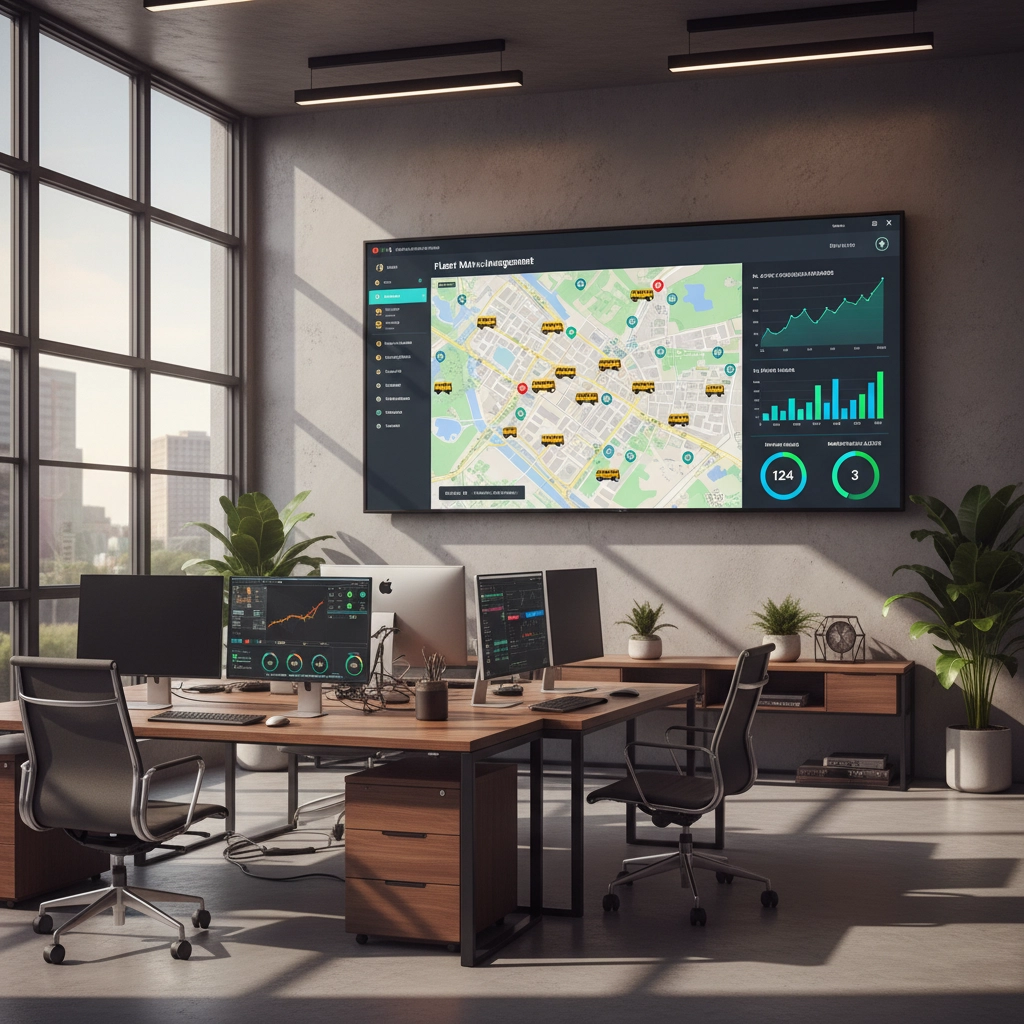
The most powerful safety improvements come from systems that connect all these technologies into comprehensive fleet management platforms that provide transportation directors with complete operational visibility.
Platform integration includes: • Real-time dashboard monitoring of all buses and drivers • Predictive maintenance alerts based on vehicle data • Driver performance analytics and coaching recommendations • Route optimization based on safety and efficiency metrics
These integrated platforms transform individual safety technologies into comprehensive safety ecosystems. Transportation directors can identify patterns across their entire fleet, allocate resources more effectively, and demonstrate regulatory compliance to parents and administrators.
Operational benefits: • 20-30% reduction in maintenance costs through predictive analytics • Improved driver retention through positive coaching programs • Enhanced parent confidence through transparent communication • Streamlined regulatory compliance and reporting
The Connected Safety Future
The convergence of these seven technologies creates something greater than the sum of their parts. Districts implementing comprehensive technology suites report significantly better safety outcomes than those using isolated solutions.
What this means for your district: • Proactive prevention replaces reactive incident response • Data-driven decisions improve safety and efficiency • Parent confidence increases through transparent communication • Driver performance improves through supportive coaching
At Schoolbells Transportation, we understand that technology is only as good as the people who implement it. That's why we focus on solutions that enhance human judgment rather than replace it, creating safer journeys for every student we serve.
The question isn't whether your district can afford to implement these technologies: it's whether you can afford not to. Student safety isn't just our top priority; it's our sacred responsibility to every family who trusts us with their children.
Ready to learn how these technologies can transform your student transportation program? Contact us at Schoolbells Transportation to discuss your district's specific needs and discover which solutions make the most sense for your budget and goals.


No comments:
Post a Comment